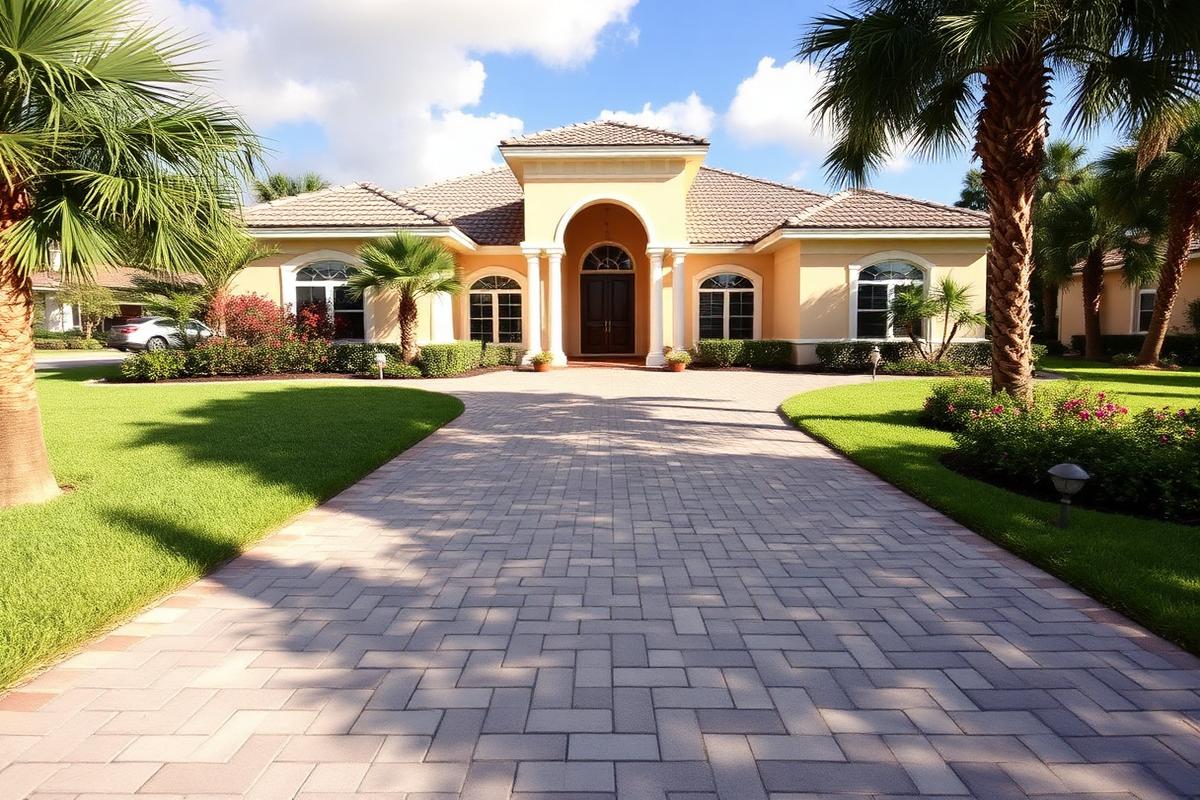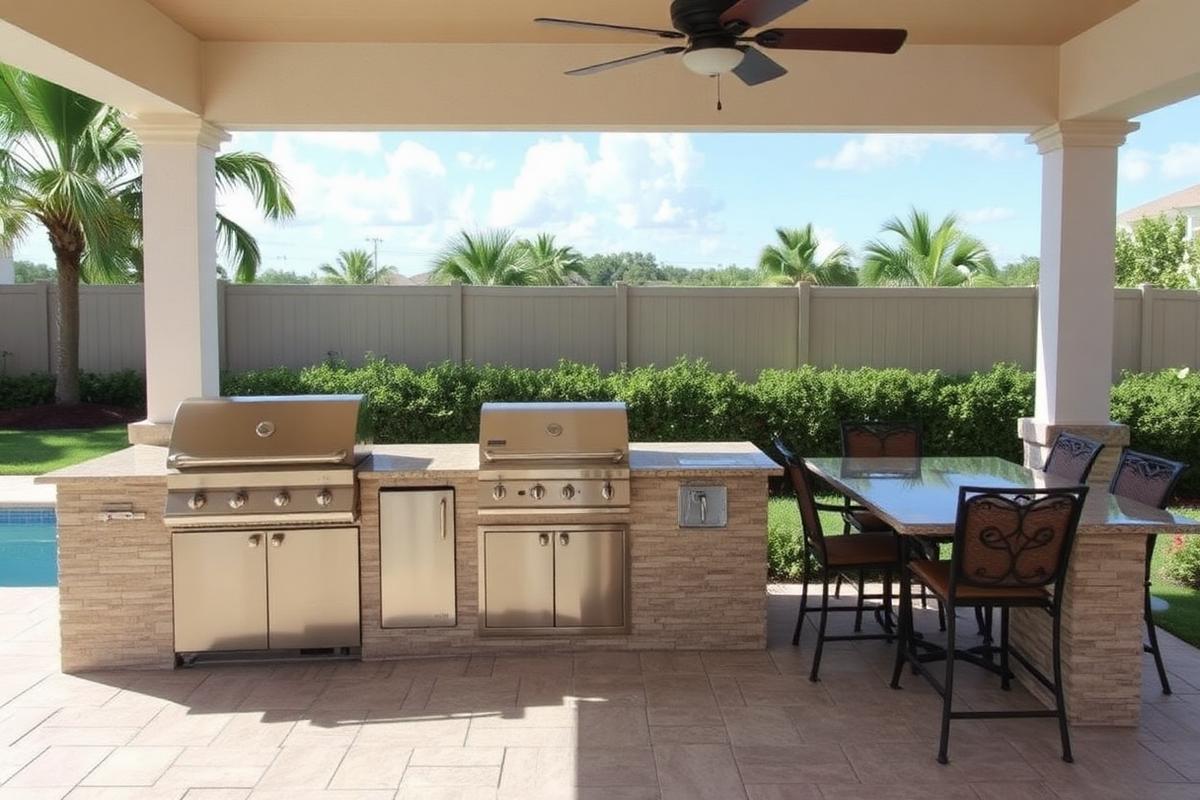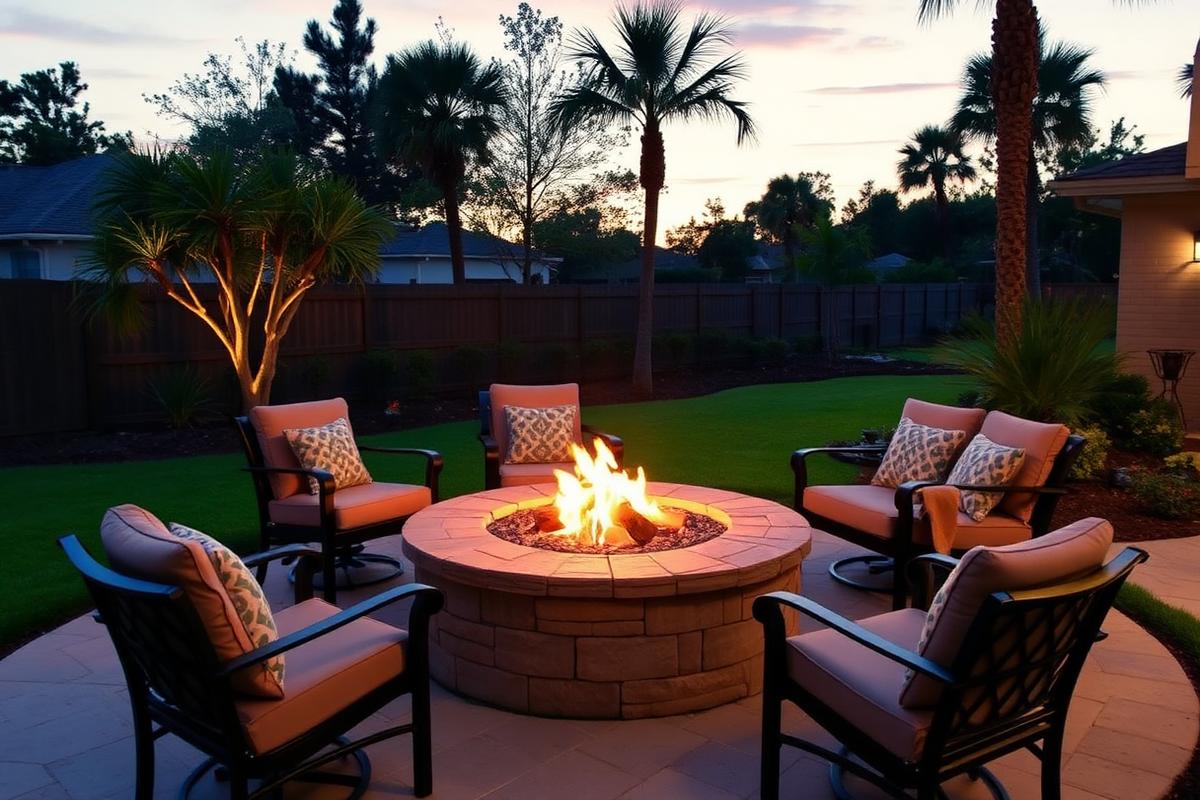
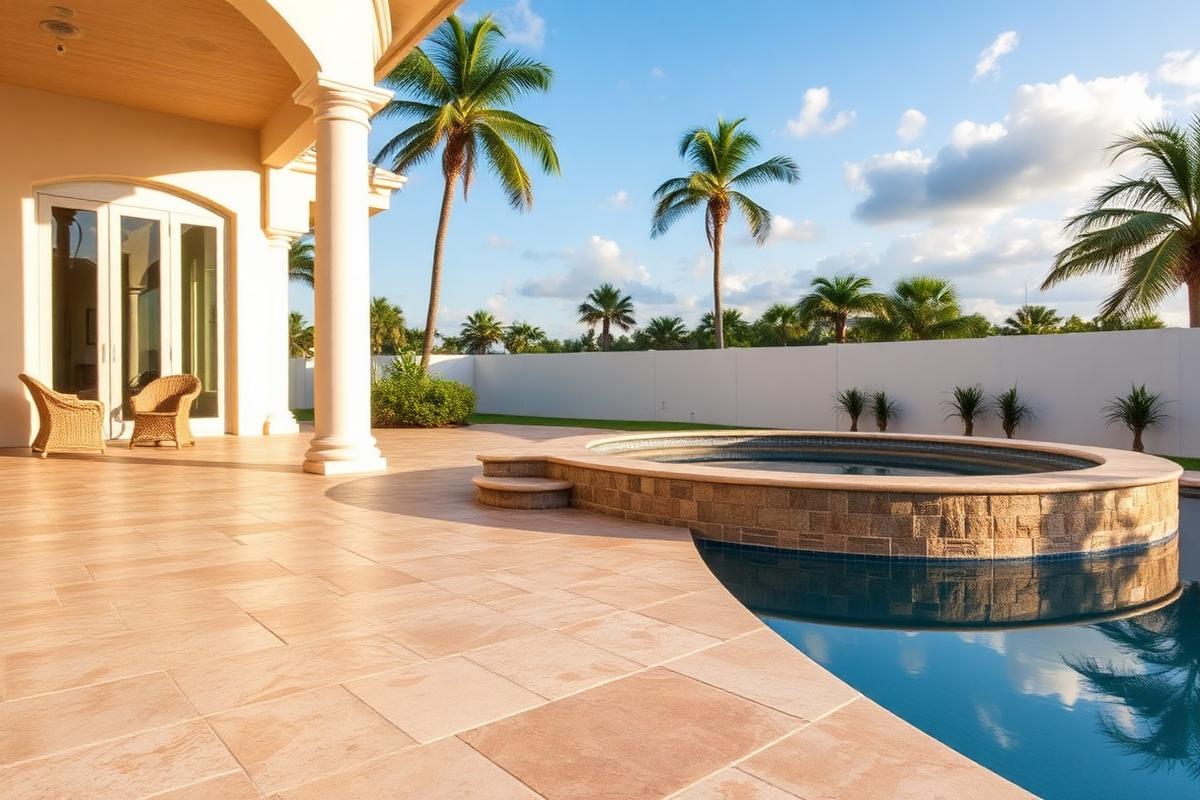
A side-by-side look at heat, slip resistance and long-term maintenance for two premium pool deck materials.
Travertine and porcelain are both excellent around Florida pools, but they solve slightly different problems.
Travertine is a natural stone with tiny air pockets that keep it noticeably cooler underfoot than concrete or dark tile. It has natural variation from piece to piece, so decks read warm and organic. It does need periodic sealing, and softer stone can etch if pool chemicals are left sitting.
Porcelain pavers are manufactured, so color and thickness are dead consistent. They're extremely dense, which means near-zero absorption, excellent stain resistance, and virtually no sealing. Cutting and setting them takes more skill, and the edge details matter a lot on a pool coping transition.
For slip resistance, both work when you specify the right finish: tumbled or brushed travertine, or a textured (R11) porcelain. Never use a polished finish inside a pool enclosure.
Our rule of thumb: choose travertine for a resort, old-world look with cool comfort; choose porcelain for a modern, low-maintenance deck with crisp lines.
Planning a project like this?
Get a free, no-pressure estimate from our Sarasota crew.
Request your free estimate