How Florida's sand, sun and rain affect your driveway — and why interlocking pavers usually win the long game.
Florida driveways live a hard life. Sandy sub-grade, daily heat cycling, and summer downpours all work against a slab of poured concrete, and the first thing homeowners notice is cracking along control joints within just a few seasons.
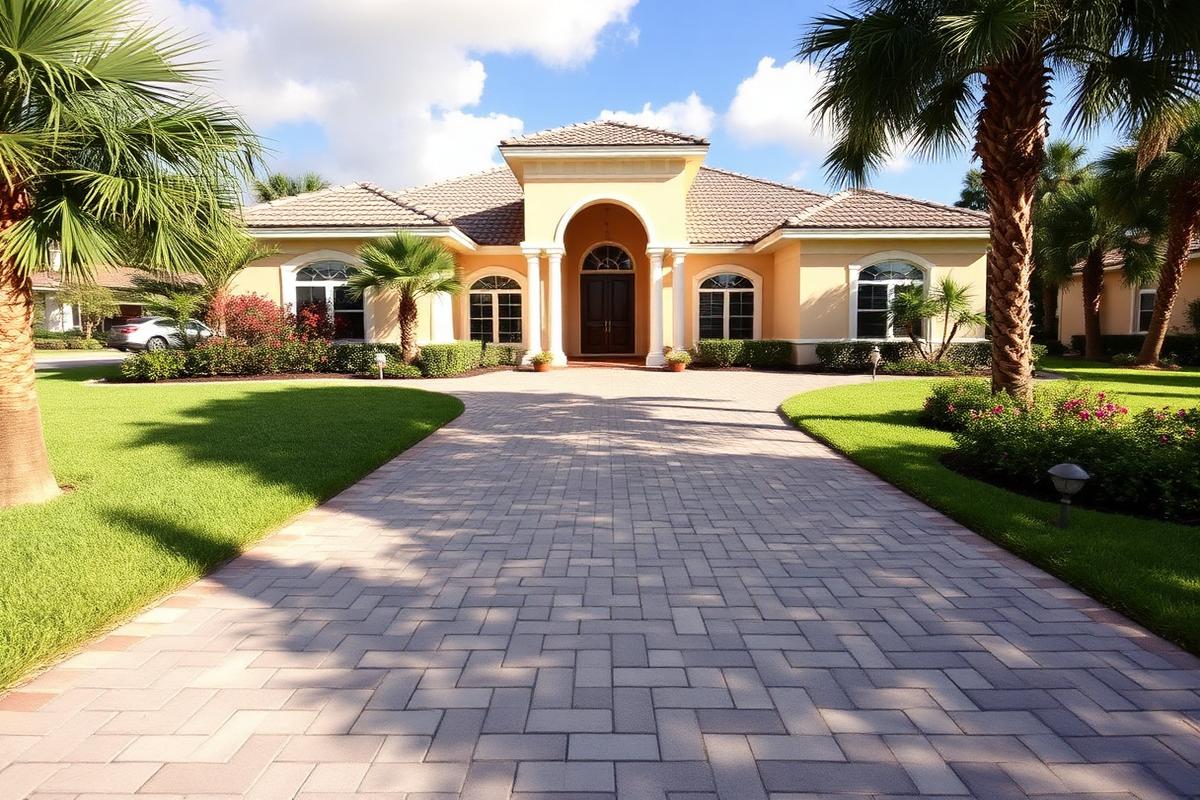
Interlocking pavers behave differently. Because the surface is made of hundreds of individual units set on a compacted base and bedding layer, small amounts of ground movement are absorbed by the joints instead of splitting the surface. That flexibility is exactly why paver driveways routinely outlast poured concrete on the Suncoast.
Repairs are the other big difference. If a utility line needs access or an oil stain sets in, individual pavers lift out and go back in — no patch line, no color mismatch. A concrete slab has to be saw-cut and poured, and that repair is visible forever.
The trade-off is installation quality. A paver driveway is only as good as its base: we excavate to depth, compact in lifts, screed a consistent bedding course, and lock everything in with edge restraint and polymeric sand. Skip those steps and any paver job will rut within a year.
If you want the longest service life with the best curb appeal, pavers are the right call for nearly every Sarasota-area driveway we build.
Planning a project like this?
Get a free, no-pressure estimate from our Sarasota crew.
Request your free estimate